How to take care of ethnic wear is something every woman should know, especially if you love collecting beautiful outfits for festivals, weddings, and special occasions. Ethnic wear often comes with delicate fabrics, intricate embroidery, and detailed work that need a little extra attention. Without proper care, even the most expensive outfit can lose its shine after just a few washes.
In this guide, we at Shopvra will walk you through simple, easy ways to take care of your ethnic wear so it stays fresh, beautiful, and long-lasting. Whether it’s a simple cotton kurti or a heavily embroidered anarkali suit, these tips will help you keep every piece looking as good as new.
Table of Contents
Why Ethnic Wear Needs Special Care
Unlike regular everyday clothes, ethnic wear often involves delicate fabrics like silk, georgette, chiffon, and net, along with embellishments like sequins, zari, and embroidery. These materials can get damaged easily if washed or stored the wrong way.
Taking a little extra care not only keeps your outfit looking new, it also helps you get more wear out of pieces you may have spent good money on, especially wedding or festive outfits that you don’t wear too often.
How to Wash Ethnic Wear the Right Way
Check the Fabric Before Washing
Always check the fabric type before deciding how to wash your outfit. Cotton and linen kurtas are usually easier to wash, while silk, georgette, and net need much gentler handling.
Hand Wash Delicate Fabrics
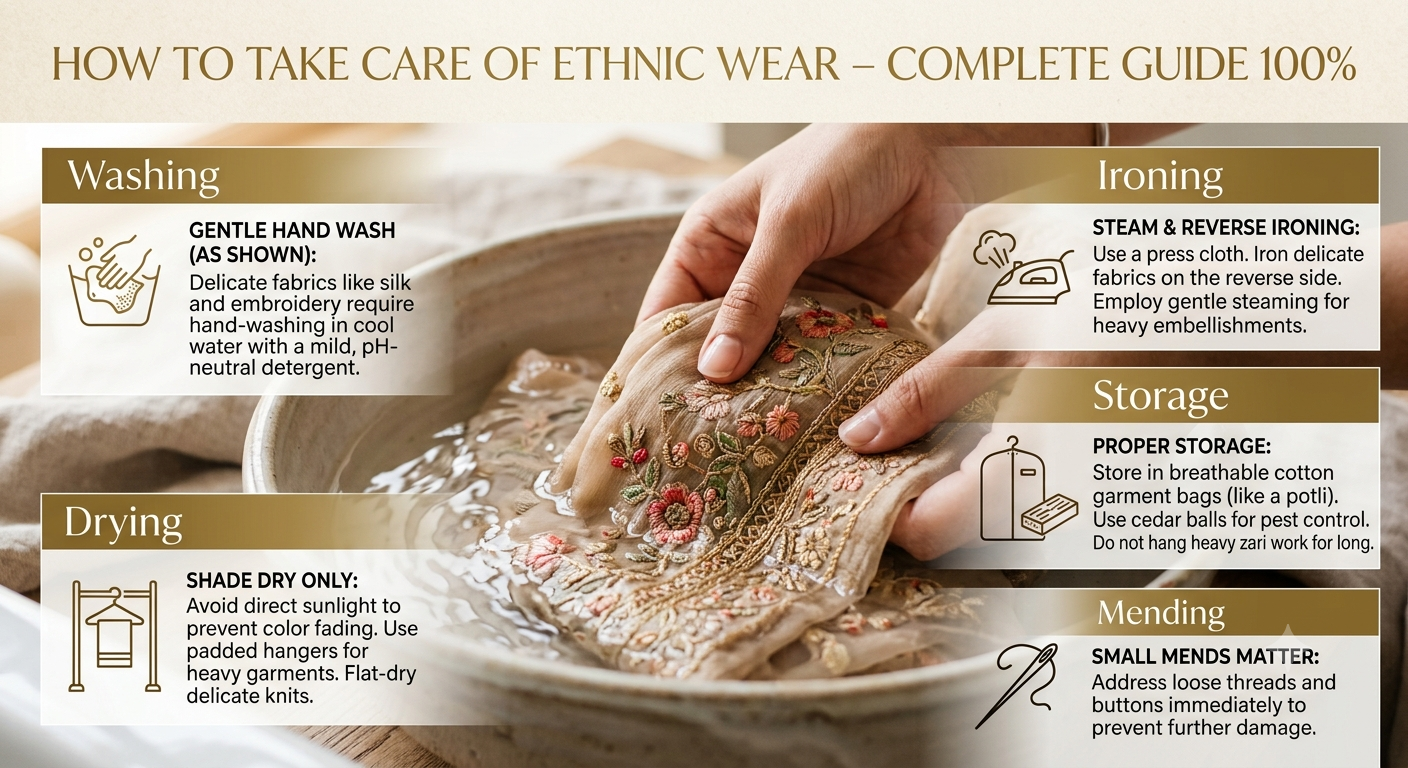
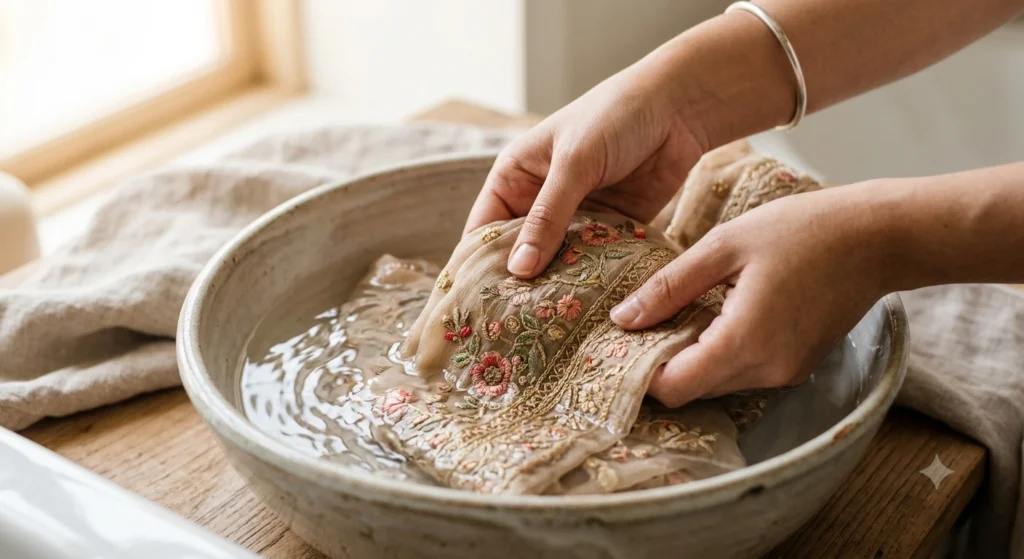
For outfits with embroidery, sequins, or delicate fabric, hand washing is always safer than machine washing.
- Use cold or lukewarm water, never hot water.
- Use a mild detergent, and avoid harsh chemicals or bleach.
- Gently swirl the fabric in water instead of scrubbing or rubbing it.
- Avoid soaking heavily embroidered pieces for too long, as this can loosen the thread work.
Machine Wash Only Simple Cotton Pieces
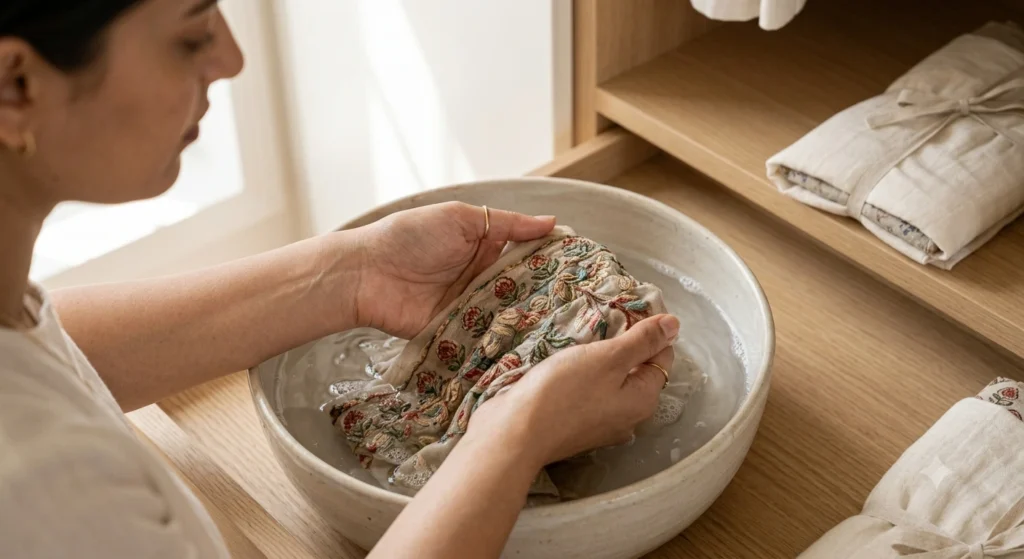
Simple, everyday cotton kurtas can usually be machine washed, but always use a gentle cycle and put the outfit inside a laundry bag to protect it from friction and pulling.
Avoid Wringing the Fabric
Never wring or twist ethnic wear to remove water, especially delicate fabrics. Instead, gently press out the excess water and let it air dry.
How to Dry Ethnic Wear Properly
- Always dry ethnic wear in shade, not under direct sunlight, as strong sunlight can fade colors over time.
- Dry heavily embroidered or embellished pieces flat instead of hanging them, as hanging can stretch the fabric or the embroidery.
- Simple cotton kurtas can be hung to dry, but always use a wide hanger to avoid shoulder marks.
How to Iron Ethnic Wear Without Damage
- Always check the fabric label before ironing, as some fabrics need low heat while others may not need ironing at all.
- Iron on the reverse side of the fabric, especially for embroidered or printed outfits, to protect the design.
- For delicate fabrics like silk or georgette, place a thin cotton cloth over the fabric before ironing to prevent direct heat damage.
- Avoid ironing directly over sequins, mirror work, or heavy embellishments, as the heat can melt or damage them.
How to Store Ethnic Wear Correctly
Proper storage is just as important as washing and ironing when it comes to keeping your ethnic wear in good condition.
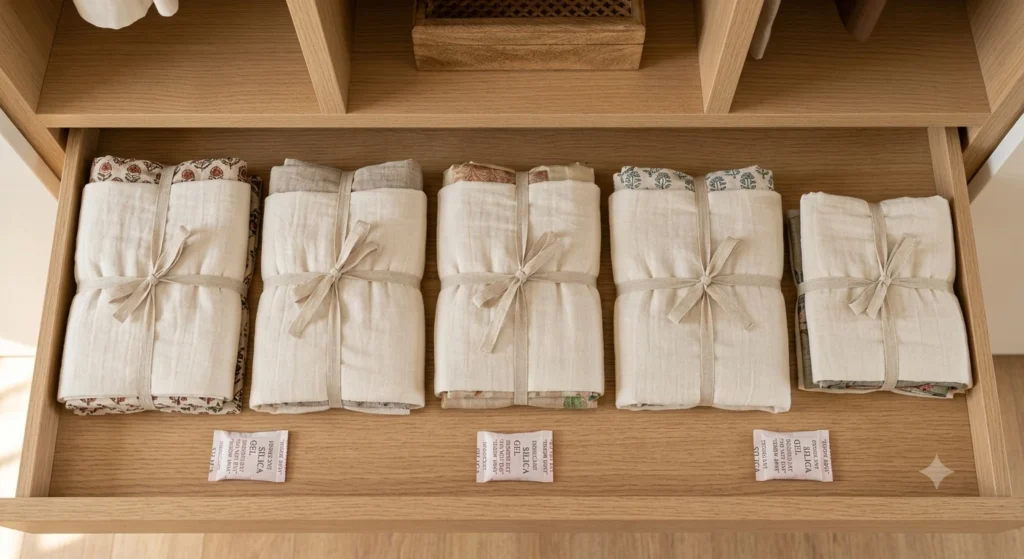
- Store heavily embellished outfits by wrapping them in a soft cotton or muslin cloth instead of plastic covers, as plastic can trap moisture.
- Hang lightweight kurtas and simple outfits on padded hangers to maintain their shape.
- Fold heavier outfits like lehengas or anarkalis instead of hanging them, as their weight can stretch the fabric over time.
- Store silk outfits separately from embroidered or sequin pieces to avoid the embellishments catching onto the silk fabric.
- Add silica gel packets or neem leaves in your wardrobe to keep moisture and pests away, which is especially useful for silk and delicate fabrics.
Tips for Removing Stains from Ethnic Wear
- Treat stains as soon as possible, since older stains are much harder to remove.
- For oil-based stains, dab the area with a mild detergent instead of rubbing it, as rubbing can spread the stain further.
- Avoid using bleach on colored or printed ethnic wear, as it can damage both the color and the fabric.
- For delicate or expensive outfits, it is always safer to get the stain professionally treated rather than trying harsh home remedies.
When to Choose Dry Cleaning Over Hand Washing
Some outfits are simply safer to dry clean rather than wash at home, especially:
- Heavily embroidered or sequin work outfits
- Silk sarees and silk kurta sets
- Outfits with delicate net or organza fabric
- Any outfit you are unsure how to handle at home
Dry cleaning may cost a little extra, but it helps protect expensive or delicate pieces from accidental damage.
Shop Long-Lasting Ethnic Wear at Shopvra
At Shopvra, we design our ethnic wear for women using quality fabrics that are made to last, from simple cotton kurtis to detailed anarkali suits and festive wear. With the right care, these pieces can stay beautiful for years, giving you more value from every purchase.
Explore our latest collection and find ethnic wear pieces that are as easy to care for as they are beautiful to wear.
Conclusion
Taking care of ethnic wear does not have to be complicated or time-consuming. With a few simple steps, like washing gently, drying in shade, ironing carefully, and storing correctly, you can keep your favorite outfits looking fresh and beautiful for a long time. A little extra care goes a long way, especially for pieces you love and wear again and again.
We hope this guide on how to take care of ethnic wear helps you protect your outfits and enjoy them for years to come. Visit Shopvra today to explore ethnic wear designed to look beautiful and last long.
for more information contact ushttps://shopvra.in/contact-us/
FAQs
1. Can I machine wash embroidered ethnic wear? It is best to avoid machine washing embroidered ethnic wear, as it can loosen the thread work. Hand washing gently is a safer option.
2. How often should I dry clean my ethnic wear? Heavily embellished or silk outfits can be dry cleaned after every couple of wears, while simple cotton pieces can be washed at home more frequently.
3. How do I store silk ethnic wear to prevent damage? Wrap silk outfits in a soft cotton or muslin cloth, store them separately from embroidered pieces, and keep them away from direct sunlight and moisture.
4. Is it safe to iron ethnic wear with sequins or mirror work? Avoid ironing directly over sequins or mirror work. If needed, iron on the reverse side or place a thin cloth over the area to protect it.
5. Where can I buy good quality, long-lasting ethnic wear online? You can explore a wide range of durable, well-made ethnic wear for women at Shopvra, designed to stay beautiful with proper care.